
TechMYTH OR FACT?
What Happened to the Neanderthals?
A modelling study led by Ariane Burke at the Université de Montréal borrowed methods from wildlife-habitat research; it suggests Neanderthals were more isolated, not simply outcompeted.

 On air: Hank Ledger and Vera Bullock on BBN Newsroom
Published
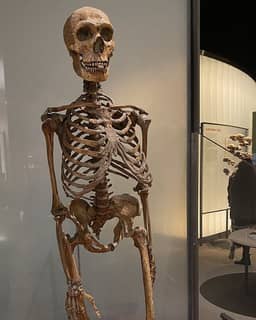
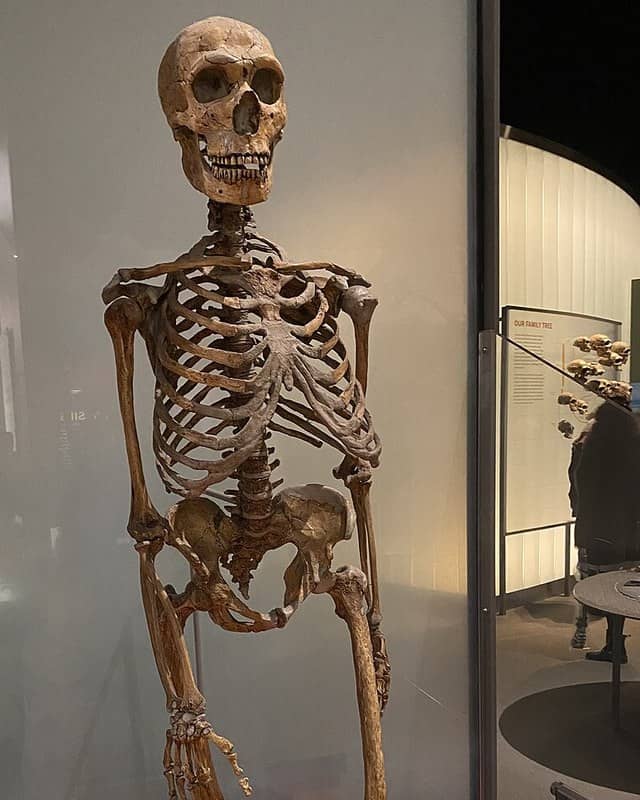 Photo: Ryan Schwark · CC0 · Wikimedia Commons
Watch it as it aired: Hank Ledger and Vera Bullock on this story, from BBN Newsroom at 10:12 AM ET. Cartoon anchors, real headline: the facts are The New York Times's, the jokes are ours.
At a glance
- First reported by The New York Times: “What Happened to the Neanderthals?”, with reporting from ScienceDaily (citing Université de Montréal), Phys.org, ScienceAlert and UdeMnouvelles (Université de Montréal).
- Covered on BBN on Monday, October 26, 2026, at 10:12 AM ET on BBN Newsroom, by Hank Ledger and Vera Bullock.
The real story
The reporting behind this segment. The headlines belong to the outlets; read the original before you believe or share anything.
- The New York TimesWhat Happened to the Neanderthals?
- ScienceDaily (citing Université de Montréal)Scientists think they finally know why Neanderthals vanished April 28, 2026 · facts used on air
- Phys.orgClimate and competition alone cannot explain Neanderthal extinction, study finds facts used on air
- ScienceAlertNeanderthals May Never Have Truly Gone Extinct, Study Reveals : ScienceAlert November 13, 2025 · facts used on air
- UdeMnouvelles (Université de Montréal)Why did the Neanderthals disappear? - UdeMnouvelles April 22, 2026 · facts used on air
What BBN said about it
Hank Ledger · Lead AnchorThe New York Times asked what happened to the Neanderthals, and the answer starts with scientists saying they shared many of the sophisticated abilities of Homo sapiens.
Vera Bullock · Co-AnchorSophisticated is a strong word for people without a group chat.
Hank Ledger · Lead AnchorA modelling study led by Ariane Burke at the Université de Montréal borrowed techniques normally used to study where plants and animals live.
Hank Ledger · Lead AnchorIt found regions favourable to Homo sapiens were more highly connected than Neanderthal ones.
Vera Bullock · Co-AnchorThey studied plants and animals for this? Fine. Then the Neanderthals were a rare shrub with no outreach.
Hank Ledger · Lead AnchorNeanderthal populations, especially in Eastern Europe, were more isolated and more vulnerable to climate variability, according to Phys.org.
Hank Ledger · Lead AnchorThe researchers say they didn't simply lose to climate or to competition.
Vera Bullock · Co-AnchorSo not dumber?
Hank Ledger · Lead AnchorNo. This is a model, so it's a suggestion about the past and not a recording of it.
Hank Ledger · Lead AnchorAnother 2025 model suggested they may have been absorbed genetically, and many of us carry one to four percent of their DNA. Ruling: myth.
Vera Bullock · Co-AnchorFine. Reach is everything. And my podcast is, I'm told by me, thriving in Eastern Europe.
Hank Ledger · Lead AnchorYour podcast has the Neanderthal problem. Very capable, extremely isolated.
More Shorts
All videos → Photo: Johannes Eva (for · CC BY-SA 4.0 · Wikimedia Commons
 Photo: Larry D. Moore · CC BY 4.0 · Wikimedia Commons
 Photo: HaeB · CC BY-SA 4.0 · Wikimedia Commons · altered by BBN, shared under CC BY-SA 4.0
 Photo: News Oresund · CC BY 2.0 · Wikimedia Commons · altered by BBN
 Photo: Gnesener1900 · CC BY-SA 3.0 · Wikimedia Commons · altered by BBN, shared under CC BY-SA 3.0
 Photo: Lyles BBQ · Public domain · Wikimedia Commons · altered by BBN






From the archive: everything BBN aired on Monday, October 26, 2026 · the Tech archive · all months
More in Tech
All Tech →
Valve Steam Frame Review: Costly and Inconsistent
Valve's Steam Frame starts at one thousand fifty-nine dollars, more than the nine hundred ninety-nine dollar Index it was meant to undercut…
Elvis Presley rightsholders sue Anthropic over 274 songs
The suit, filed in federal court in San Francisco, names 274 songs and seeks an order to destroy unauthorised copies; the legal bill alone is a…

Fielded album draws on scammers and Japanese cyberpunk
Chicago artist Fielded began as a noise project in twenty ten, and her album includes a neo-soul cover of Nine Inch Nails' Closer; the vinyl is one…
WIRED links 149 Ikea speakers into a wall of sound
The testers played Also Sprach Zarathustra through it and wrote, 'We almost wish we hadn't'; Ikea says the Kallsup can link up to one hundred units.