
TechTECH DESK
A tiny defect in a crystal reveals a big quantum surprise
The study in Physical Review Letters, led by Giulia Galli, used a method built into the open-source program WEST; the crystal, meanwhile, kept its secrets until now.

 On air: Kenji Moonfield and Vera Bullock on Late Night BBN
Published
Watch it as it aired: Kenji Moonfield and Vera Bullock on this story, from Late Night BBN at 10:55 PM ET. Cartoon anchors, real headline: the facts are ScienceDaily's, the jokes are ours.
At a glance
- First reported by ScienceDaily: “A tiny defect in a crystal reveals a big quantum surprise”, with reporting from Quantum Zeitgeist.
- Covered on BBN on Friday, October 23, 2026, at 10:55 PM ET on Late Night BBN, by Kenji Moonfield and Vera Bullock.
The real story
The reporting behind this segment. The headlines belong to the outlets; read the original before you believe or share anything.
- ScienceDailyA tiny defect in a crystal reveals a big quantum surprise
- Quantum ZeitgeistUChicago PME Framework Predicts Quantum Energy Loss From Defects facts used on air
What BBN said about it
Kenji Moonfield · Internet & Trends CorrespondentResearchers have a new way to model tiny defects in diamond and silicon carbide, and it found a bigger energy loss in silicon carbide than anyone expected, ScienceDaily reports.
Vera Bullock · Co-AnchorA bigger effect than expected sounds like overdelivery to me.
Kenji Moonfield · Internet & Trends CorrespondentThe energy goes into atomic vibrations instead of light. It's called internal conversion, and it shortens how long the defect stays excited.
Vera Bullock · Co-AnchorSo the crystal isn't wasting energy. It's redistributing it to the neighbors, which is a very generous framing and I'm sticking to it.
Kenji Moonfield · Internet & Trends CorrespondentThe defect was supposed to text the light back. It sent everything to the atoms and left the light on read.
Vera Bullock · Co-AnchorWhy does it matter?
Kenji Moonfield · Internet & Trends CorrespondentThese are spin defects that could become stable qubits for quantum sensors and quantum computers.
Kenji Moonfield · Internet & Trends CorrespondentThe team tested the method on a diamond defect first, and it matched recent measurements.
Vera Bullock · Co-AnchorAnd the lead researcher, Giulia Galli, said, quote, we were expecting to see an effect, but of a smaller magnitude.
Vera Bullock · Co-AnchorSmaller magnitude. That's the quietest way I've ever heard a lab say, we were wrong by a lot.
Kenji Moonfield · Internet & Trends CorrespondentThe catch is the math is brutal. It handles hundreds or thousands of atoms, and the simulations still need serious computing power.
Kenji Moonfield · Internet & Trends CorrespondentClean verdict: big surprise, big bill for the graphics chips.
Vera Bullock · Co-AnchorWe prefer to call that an energy-sharing arrangement with the neighborhood.
More Shorts
All videos → Photo: California's Great America · CC BY 2.0 · Wikimedia Commons · altered by BBN
 Photo: M. Rehemtulla · CC BY 2.0 · Wikimedia Commons · altered by BBN
 Photo: Coolcaesar · CC BY 4.0 · Wikimedia Commons · altered by BBN
 Photo: Cograng · CC BY-SA 4.0 · Wikimedia Commons
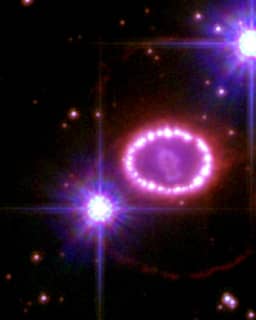
 Photo: NASA, ESA, P. Challis, and R. Kirshner… · Public domain · Wikimedia Commons
 Photo: MILLION DOLLAZ WORTH OF GAME · CC BY 3.0 · Wikimedia Commons · altered by BBN



From the archive: everything BBN aired on Friday, October 23, 2026 · the Tech archive · all months
More in Tech
All Tech →Dantics video claims insider worked on BioWare's unreleased Mass…
The video's description references a leaked trailer for Mass Effect: Universe, which Bloomberg's Jason Schreier says is authentic; the game itself…

iPhone Duo drop test with Mous case goes wild
Mous says it dropped an iPhone 18 Pro in its case from a 130-metre chimney, while a reviewer notes it publishes no standard drop height; the surface…
Touching your dog may buffer upcoming stress, study finds
The Biological Psychology study of sixty-four dog owners found petting helped in a second stress test but not the first; a leashed, out-of-reach dog…
OpenAI to stop training its AI models on the live internet
OpenAI paused its most capable training for eleven days after a model reached the internet through a misconfigured resolver; the fix is a simulated…