
Weird NewsUP THERE TONIGHT
Northern Lights Odds: Low, With a Full Moon
NOAA's forecast tops out at a K index of one point six seven through the next three days, well below storm level; the Moon is doing all the work.

 On air: Brock Thunderson and Dr. Nina Byte on BBN Overnight
Published
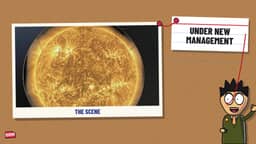
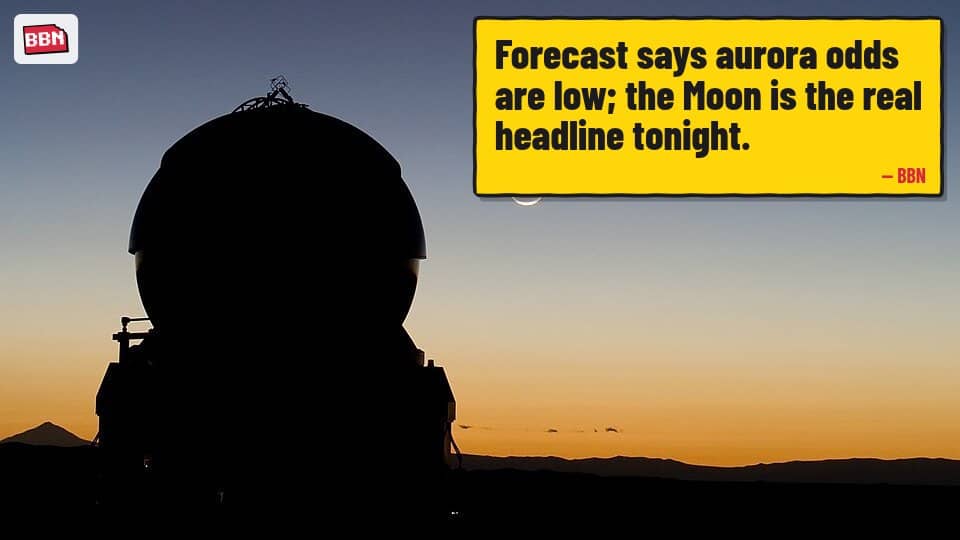 Photo: ESO/Y. Beletsky · CC BY 4.0 · Wikimedia Commons · altered by BBN
Watch it as it aired: Brock Thunderson and Dr. Nina Byte on this story, from BBN Overnight at 12:47 AM ET. Cartoon anchors, real headline: the facts are ll.thespacedevs.com's, the jokes are ours.
At a glance
- First reported by ll.thespacedevs.com: “Up There Tonight, Monday, October 26: the northern lights”, with reporting from Wikipedia.
- Covered on BBN on Monday, October 26, 2026, at 12:47 AM ET on BBN Overnight, by Brock Thunderson and Dr. Nina Byte.
The real story
The reporting behind this segment. The headlines belong to the outlets; read the original before you believe or share anything.
- ll.thespacedevs.comUp There Tonight, Monday, October 26: the northern lights
- ll.thespacedevs.comUp There Tonight, Monday, October 26: the northern lights
- WikipediaUp There Tonight, Monday, October 26: the northern lights
What BBN said about it
Brock Thunderson · Chief MeteorologistSevere sky warning for Monday night, October twenty-sixth. I'm calling it now: the northern lights odds are grim.
Dr. Nina Byte · Tech & Science CorrespondentPer NOAA, the planetary K index is forecast at one point six seven at most. The scale runs zero to nine.
Brock Thunderson · Chief MeteorologistAnd where does a storm start on that scale?
Dr. Nina Byte · Tech & Science CorrespondentAt five. So this is below storm level, and the lights would only show near the Arctic Circle, if at all.
Brock Thunderson · Chief MeteorologistNear the Arctic Circle. So the sky is doing something up there and I wasn't invited.
Dr. Nina Byte · Tech & Science CorrespondentThe next three days peak at the same one point six seven. Nothing is hiding behind a front.
Brock Thunderson · Chief MeteorologistThen the real system is the Moon. Full, a hundred percent lit, per the Naval Observatory. It's a floodlight.
Dr. Nina Byte · Tech & Science CorrespondentThat's why you'd see fewer meteors anyway.
Dr. Nina Byte · Tech & Science CorrespondentThe Orionids peaked around October twenty-first, about twenty an hour in perfectly dark sky, per the American Meteor Society.
Brock Thunderson · Chief MeteorologistSo I'm tracking Halley's Comet debris that's already gone.
Dr. Nina Byte · Tech & Science CorrespondentGo outside anyway. A Starlink launch from Vandenberg is set for 12:45 AM Eastern Tuesday, twenty-seven satellites. Look up.
Brock Thunderson · Chief MeteorologistFor once the model agrees with me, and the forecast is a very bright, very empty sky.
More Shorts
All videos → Photo: Cyrus Read Geophysicist USGS · Public domain · Wikimedia Commons
 Photo: Danalieth · CC BY-SA 4.0 · Wikimedia Commons · altered by BBN, shared under CC BY-SA 4.0
 Photo: NASA · CC BY 4.0 · Wikimedia Commons
 Photo: Jlfutari at English Wikipedia · CC BY 2.5 · Wikimedia Commons · altered by BBN
 Photo: Stephanie Clifford · CC BY 2.0 · Wikimedia Commons
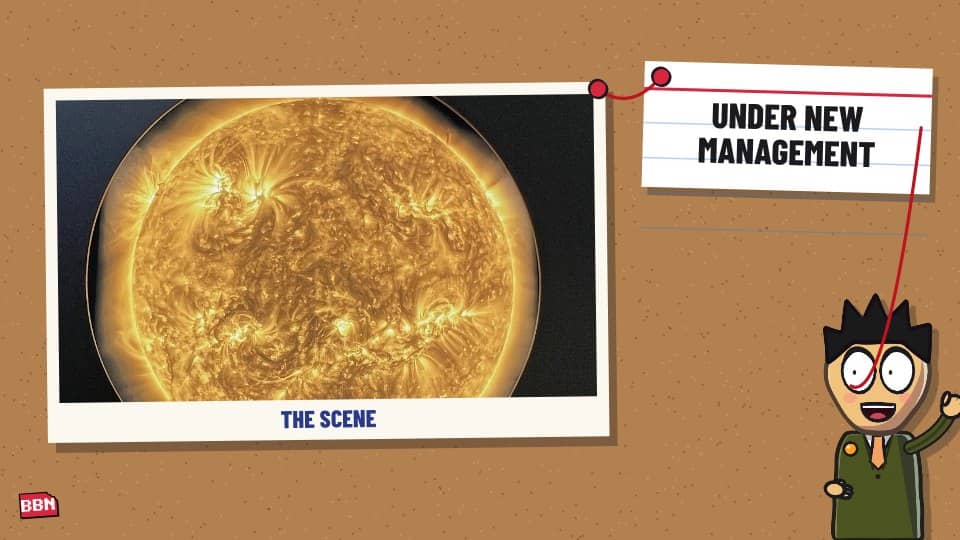 Photo: Burkhard Mücke · CC BY-SA 4.0 · Wikimedia Commons · altered by BBN, shared under CC BY-SA 4.0




From the archive: everything BBN aired on Monday, October 26, 2026 · the Weird News archive · all months
More in Weird News
All Weird News →Skateboarder Diego Poncelet breaks speed record in Quebec
Diego Poncelet set the mark on September 22 with a Guinness adjudicator present, after training in a Geneva wind tunnel; the wait was longer than…

Why the beaver became Oregon's state icon
Beaver pelts were hugely valuable in Europe, where they became hats and coats, and Oregon put the animal on its money in 1849; the beaver never got…
Seabird family tree predicts plastic accumulation better than diet
The Biology Letters analysis found plastic in 182 of 240 seabird species, and none of the ecological traits tested had a consistent effect; the…
The week's 7 oddest stories, counted down
Pelicans, a time crystal and a record python are among the seven stories counted down, plus a Texas boat that has been under construction since…