
TechBBN TECH
How to Catch the Orionids, a Meteor Shower From Halley's Comet
The Planetary Society expects about twenty meteors an hour at the peak, though a bright moon will cut into the view; the comet's next visit is decades off.

 On air: Hank Ledger and Vera Bullock on BBN This Morning
Published
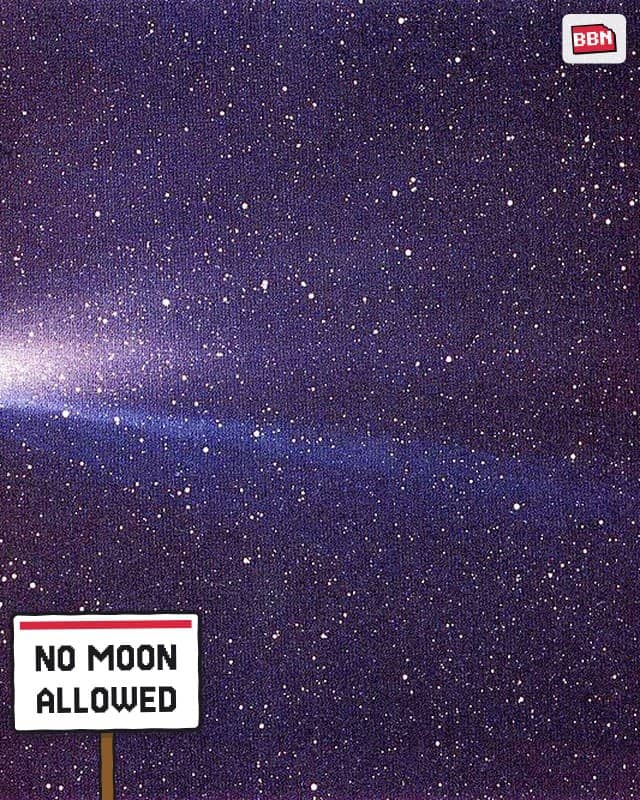 Photo: NASA/W. Liller · Public domain · Wikimedia Commons · altered by BBN
Watch it as it aired: Hank Ledger and Vera Bullock on this story, from BBN This Morning at 6:15 AM ET. Cartoon anchors, real headline: the facts are The New York Times's, the jokes are ours.
At a glance
- First reported by The New York Times: “How to Catch the Orionids, a Meteor Shower From Halley’s Comet”, with reporting from Planetary Society, Live Science, Natural History Museum and Forbes.
- Covered on BBN on Wednesday, October 21, 2026, at 6:15 AM ET on BBN This Morning, by Hank Ledger and Vera Bullock.
The real story
The reporting behind this segment. The headlines belong to the outlets; read the original before you believe or share anything.
- The New York TimesHow to Catch the Orionids, a Meteor Shower From Halley’s Comet
- Planetary SocietyThe Orionid meteor shower 2026: How to watch facts used on air
- Live ScienceOrionids 2026: One of fall's best meteor showers peaks this week as pieces of Halley's Comet fall to Earth October 20, 2026 · facts used on air
- Natural History MuseumOrionid meteor shower 2026: When and how to watch facts used on air
- ForbesThe Orionid Meteor Shower Peaks Tonight — Here’s When To Look October 21, 2026 · facts used on air
What BBN said about it
Hank Ledger · Lead AnchorStargazers are getting ready for the Orionid meteor shower, a fall favorite known for bright, speedy streaks that can sometimes linger in the sky for minutes, the New York Times reports.
Vera Bullock · Co-AnchorAnd the streaks are pieces of Halley's Comet, so you get to look at actual comet dust without leaving your yard.
Hank Ledger · Lead AnchorEarth passes through the comet's debris once in October and once in early May.
Hank Ledger · Lead AnchorThe Orionids hit the atmosphere at just under seventy kilometers per second.
Vera Bullock · Co-AnchorSeventy kilometers per second! That is a dust particle with somewhere to be.
Hank Ledger · Lead AnchorNow the catch.
Hank Ledger · Lead AnchorThe Planetary Society expects about twenty meteors an hour at the peak, and a bright waxing gibbous moon will reduce how many you see.
Vera Bullock · Co-AnchorI'd say the moon is joining the experience as a bright, supportive co-host.
Hank Ledger · Lead AnchorA co-host that makes the show harder to see.
Vera Bullock · Co-AnchorForbes says there's a moonless window before dawn, so the co-host does take a break.
Hank Ledger · Lead AnchorSo we are all watching dust from a comet that won't be back until twenty sixty-one, and the moon is the only one who showed up on time.
More Shorts
All videos → Photo: 654321 · CC0 · Wikimedia Commons · altered by BBN
 Photo: Tony Webster · CC BY 2.0 · Wikimedia Commons · altered by BBN
 Photo: NASA · Public domain · Wikimedia Commons · altered by BBN
 Photo: Coolcaesar · CC BY-SA 4.0 · Wikimedia Commons · altered by BBN, shared under CC BY-SA 4.0
 Photo: Scott Andrews, Canon · Public domain · Wikimedia Commons · altered by BBN
 Photo: Coolcaesar · CC BY 4.0 · Wikimedia Commons · altered by BBN



From the archive: everything BBN aired on Wednesday, October 21, 2026 · the Tech archive · all months
More in Tech
All Tech →Dwarf reedsnakes roll to escape, faster than they wriggle
Published in Current Biology, the study found the snakes' rolling peaks at about four times their usual wriggling speed; a snake with a wheel plan.
Valerion VisionMaster Max 4K projector review: great picture, okay…
Engadget's reviewer says the five-thousand-dollar flagship follows a hit Kickstarter and gives near-perfect image quality; the price is the hard…
Hubble photo shows the edge of spiral galaxy NGC 1827
NASA says the image comes from a Hubble survey of two hundred sixty satellite galaxies; the bright star beside the center is just a foreground…


Meta Policy Chief Joel Kaplan to Leave Company
Kaplan will stay through the November third midterms to oversee a transition, with Dina Powell McCormick taking external affairs; he announced the…