
U.S.BONK-O-METER
Gulf oil spill study finds lasting damage to marine life
The study found fish numbers in the Gulf's twilight zone fell 63.5 percent after the spill, a layer that had not been studied beforehand; the baseline arrived late.

 On air: Hank Ledger and Vera Bullock on The Bonk-o-Meter
Published
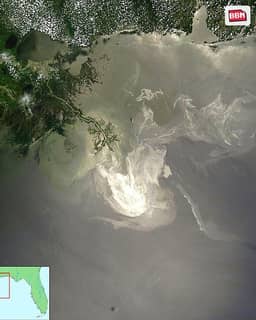
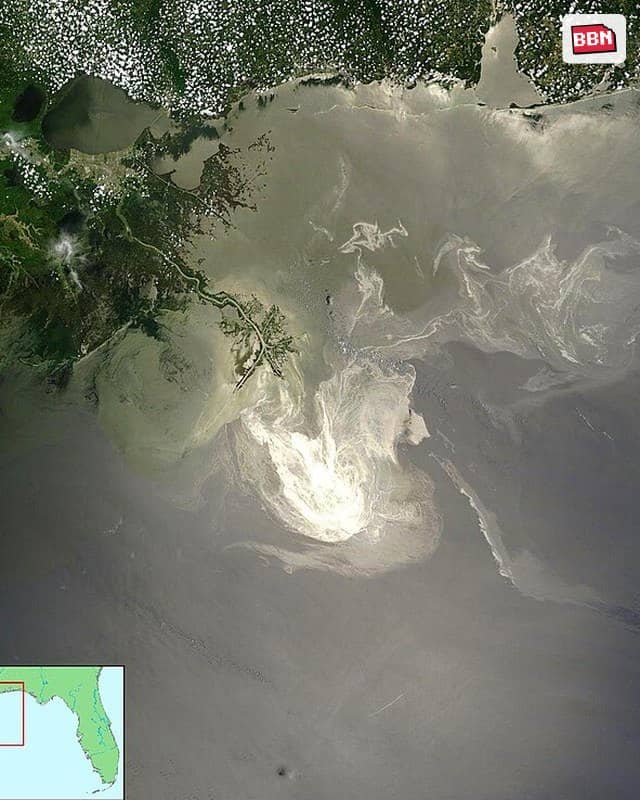 Photo: NASA / GSFC , MODIS Rapid Response AND demis.nl AND FT2 · Public domain · Wikimedia Commons · altered by BBN
Watch it as it aired: Hank Ledger and Vera Bullock on this story, from The Bonk-o-Meter at 6:07 AM ET. Cartoon anchors, real headline: the facts are ABC News's, the jokes are ours.
At a glance
- First reported by ABC News: “WATCH: Study shows Gulf oil spill's lasting damage”, with reporting from Associated Press via U.S. News, Phys.org and CP24.
- Covered on BBN on Wednesday, October 21, 2026, at 6:07 AM ET on The Bonk-o-Meter, by Hank Ledger and Vera Bullock.
The real story
The reporting behind this segment. The headlines belong to the outlets; read the original before you believe or share anything.
- ABC NewsWATCH: Study shows Gulf oil spill's lasting damage
- Associated Press via U.S. NewsMarine Life Dramatically Declined in Gulf of Mexico in Years After BP Oil Spill, Study Finds October 19, 2026 · facts used on air
- Phys.orgMarine life dramatically declined in Gulf of Mexico in years after BP oil spill, study finds October 20, 2026 · facts used on air
- CP24Marine life dramatically declined in Gulf of Mexico since BP oil spill, study finds October 19, 2026 · facts used on air
What BBN said about it
Hank Ledger · Lead AnchorThe claim under review: more than sixteen years after the BP oil spill, the Gulf of Mexico is still showing lasting damage to marine life, ABC News reports.
Vera Bullock · Co-AnchorNow, a lot of people hear lasting damage and think bad. I prefer to call it a long-term ocean transition.
Hank Ledger · Lead AnchorThe study is in the journal PNAS.
Hank Ledger · Lead AnchorIn the key layer, fish numbers dropped sixty-three point five percent from the year after the spill to twenty fifteen, the AP says.
Vera Bullock · Co-AnchorSixty-three percent. I assume the statement reads, we are right-sizing the twilight zone.
Hank Ledger · Lead AnchorCrustaceans fell sixty-two percent, squid and octopuses fell fifty-nine point seven.
Hank Ledger · Lead AnchorAnd the AP says the krill population dropped seventy-two percent, so that's the worst line on the page.
Vera Bullock · Co-AnchorEvidence for: the researchers say the well dumped one hundred thirty-four million gallons of oil, and point to the spill as the most likely cause.
Vera Bullock · Co-AnchorThey checked temperature, oxygen and food, and none of them varied with the decline.
Hank Ledger · Lead AnchorThe catch is that nobody looked at this layer before the spill.
Hank Ledger · Lead AnchorThe twilight zone had not been studied before twenty ten. So the baseline is the disaster.
Vera Bullock · Co-AnchorAnd the rebound? They kept sampling after twenty fifteen.
Vera Bullock · Co-AnchorThere was a slight rise in twenty twenty-two and twenty twenty-three, but it was not statistically significant or lasting.
Vera Bullock · Co-AnchorI'd call it a rumor of recovery.
Hank Ledger · Lead AnchorThe rating is Full Bonkers, and the twilight zone finally got some attention. It cost sixty-three point five percent of the fish.
More Shorts
All videos → Photo: Gunnar Klack · CC BY-SA 4.0 · Wikimedia Commons · altered by BBN, shared under CC BY-SA 4.0
 Photo: Adam Schultz · Public domain · Wikimedia Commons · altered by BBN
 Photo: JD Lasica from Pleasanton, CA, US · CC BY 2.0 · Wikimedia Commons · altered by BBN
 Photo: Gage Skidmore · CC BY-SA 4.0 · Wikimedia Commons · altered by BBN, shared under CC BY-SA 4.0


From the archive: everything BBN aired on Wednesday, October 21, 2026 · the U.S. archive · all months
More in U.S.
All U.S. →
Fotografiska opens a photo museum in Shenzhen
The museum is on the third floor of Shenzhen Bay MIXC and covers about five thousand three hundred square metres; the ceiling is the dramatic part.

SCMP marks 100th instalment of dementia series
The South China Morning Post series also covers research into causes and treatment, advice for carers and stories of hope; a hundred chapters, no map.
Trump suggests he could be 'arbitrator' in DoJ anti-fraud…
The Fraud Whistleblower Incentive Program offers tipsters a one percent commission on convictions, and the Justice Department's website says it…
Man in Biden mask eats banana at Texas family's door
Watauga police say the visitor touched the doorbell camera twice and left before officers arrived, and no charges have been filed; being bizarre is…