TechMYTH OR FACT?
Scientists win 2026 Nobel Prize for controlling brain cells with light
Karl Deisseroth, Peter Hegemann and Georg Nagel share the 1.2 million dollar medicine prize for optogenetics, which began with a single-celled alga; it started as curiosity.

 On air: Dr. Nina Byte and Chip Darnell on BBN This Morning
Published
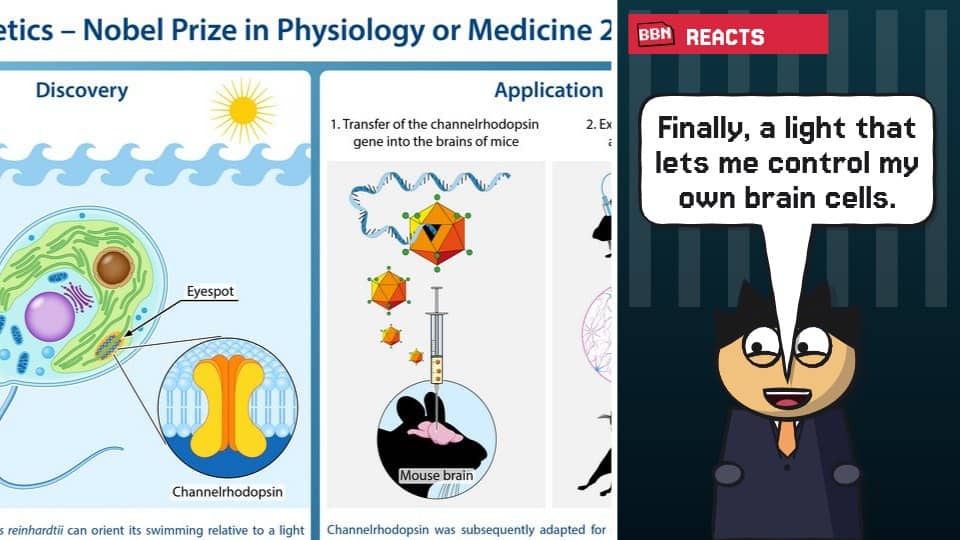 Photo: Guido4 · CC BY-SA 4.0 · Wikimedia Commons · altered by BBN, shared under CC BY-SA 4.0
Watch it as it aired: Dr. Nina Byte and Chip Darnell on this story, from BBN This Morning at 8:53 AM ET. Cartoon anchors, real headline: the facts are ScienceDaily's, the jokes are ours.
At a glance
- First reported by ScienceDaily: “Scientists win 2026 Nobel Prize for controlling brain cells with light”, with reporting from STAT and Nature.
- Covered on BBN on Tuesday, October 20, 2026, at 8:53 AM ET on BBN This Morning, by Dr. Nina Byte and Chip Darnell.
- BBN covered this story before: What an economics Nobel Prize winner knows about pricing (October 14).
The real story
The reporting behind this segment. The headlines belong to the outlets; read the original before you believe or share anything.
- ScienceDailyScientists win 2026 Nobel Prize for controlling brain cells with light
- STATSTAT's report October 5, 2026 · facts used on air
- NatureNature's report October 5, 2026 · facts used on air
What BBN said about it
Chip Darnell · U.S. News AnchorHere's a myth I swear by: science should only study things that are useful right away. Nobody needs a scientist staring at pond scum.
Dr. Nina Byte · Tech & Science CorrespondentMyth.
Dr. Nina Byte · Tech & Science CorrespondentThe Nobel in medicine just went to Karl Deisseroth, Peter Hegemann and Georg Nagel, and STAT says it began in the early nineties with Hegemann wondering how a green alga swims toward light.
Chip Darnell · U.S. News AnchorPond scum won a Nobel?
Dr. Nina Byte · Tech & Science CorrespondentThe alga senses light with a protein called channelrhodopsin.
Dr. Nina Byte · Tech & Science CorrespondentResearchers later put it into nerve cells, so light can switch them on and off. That's optogenetics, and early trials are looking at retinal degeneration.
Chip Darnell · U.S. News AnchorSo the pond was basically a very slow research lab.
Dr. Nina Byte · Tech & Science CorrespondentThe prize is twelve million kronor, about one point two million dollars, split three ways. I doubt anybody promised a payoff in nineteen ninety-two.
Chip Darnell · U.S. News AnchorThen I'm funding the next pond question, and the first thing it has to do is pay off by Friday.
More Shorts
All videos →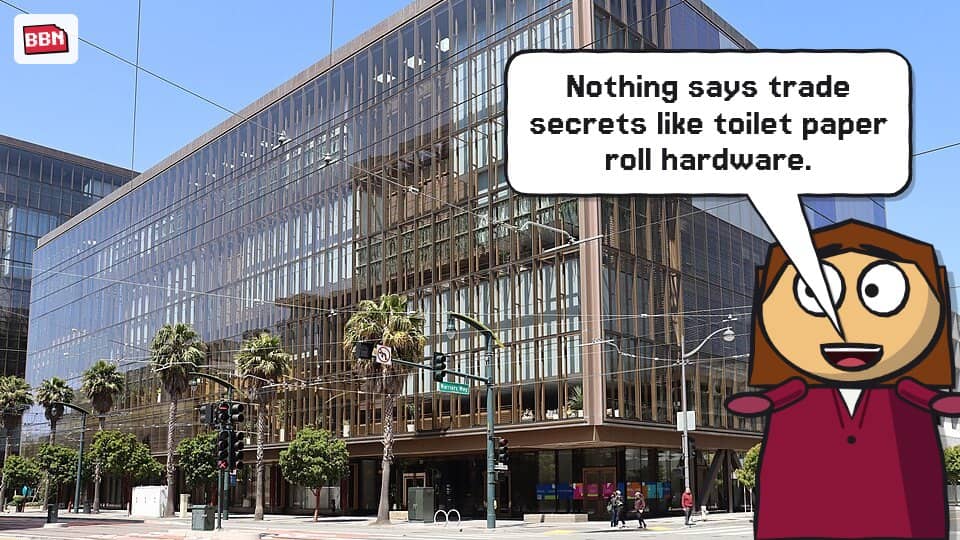 Photo: Coolcaesar · CC BY 4.0 · Wikimedia Commons · altered by BBN
 Photo: Crisco 1492 · CC BY-SA 4.0 · Wikimedia Commons · altered by BBN, shared under CC BY-SA 4.0
 Photo: Coolcaesar · CC BY 4.0 · Wikimedia Commons · altered by BBN
 Photo: Premeditated · CC BY-SA 4.0 · Wikimedia Commons
 Photo: Lyles BBQ, Smile and Learn - English, The Flat Top King… · Public domain · Wikimedia Commons · altered by BBN
 Photo: Kipp Jones from Atlanta, US · CC BY-SA 2.0 · Wikimedia Commons · altered by BBN, shared under CC BY-SA 2.0



The story so far
- What an economics Nobel Prize winner knows about pricing · NPR
- Scientists win 2026 Nobel Prize for controlling brain cells with light (this story)
From the archive: everything BBN aired on Tuesday, October 20, 2026 · the Tech archive · all months
More in Tech
All Tech →Accused OpenAI spy had folder called “Saudi Gov Docs,” FBI says
Prosecutors say the 35-year-old ex-OpenAI engineer was arrested October ninth, days before one-way tickets to Riyadh; the recorder allegedly hid in…
Wii Sports is back on the Switch 2 and reviewers like it
Nintendo Switch Sports Resort has twelve sports, up from eight, and arrives October twenty-second on the Switch 2; three old favorites were dropped.
Ex-OpenAI exec's $1.5 billion startup bets AI can revive U.S.…
Arda says it raised two hundred thirty million dollars, in a round led by Altimeter Capital, Accel and Khosla Ventures; the humans retrain faster.

Google Cloud outage, DeepSeek ban, farm relief, card heist
Google says the outage hit its europe-west2-b zone in London, its only UK cloud region, and Revolut listed thirty services as partly unavailable…